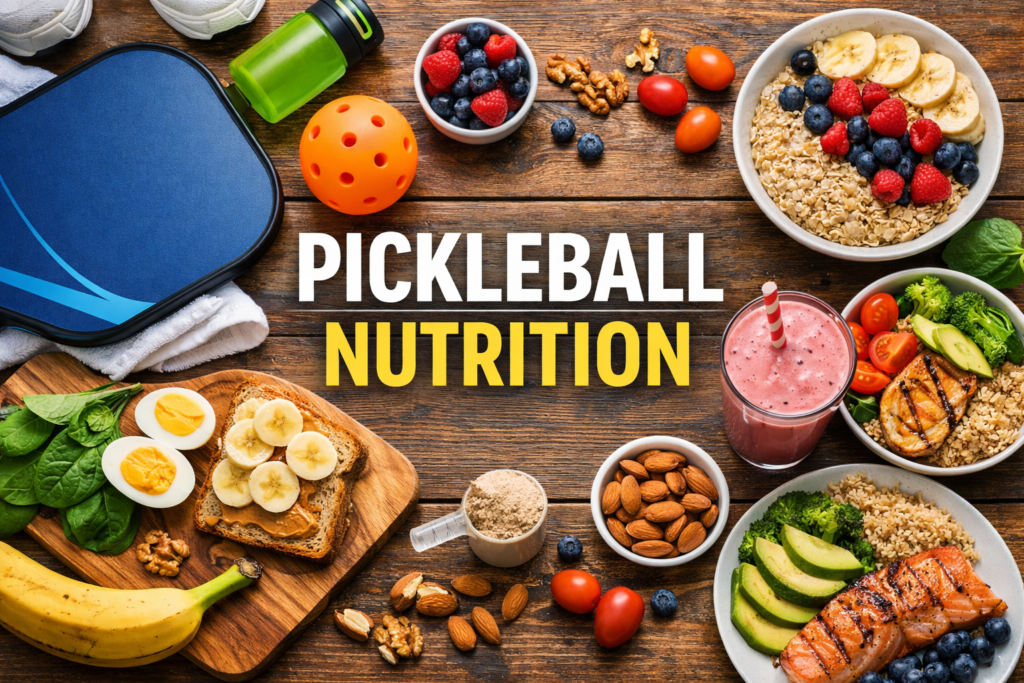
 Why Nutrition Matters in Pickleball
Pickleball may look light, but it involves:
-
Quick lateral movements
-
Explosive reactions
-
Long rallies
-
Repeated matches in tournaments
Proper nutrition helps:
-
Improve energy and focus
-
Prevent fatigue
-
Reduce injury risk
-
Speed up recovery
 Pre-Game Nutrition (1–3 Hours Before Playing)
Goal: Fuel your body with easy-to-digest carbohydrates and moderate protein.
 Good Options:
-
Oatmeal with banana
-
Whole-grain toast + peanut butter
-
Greek yogurt + berries
-
Rice with chicken
-
Smoothie (banana, milk, protein powder)
 Avoid:
-
Heavy fried foods
-
Very spicy meals
-
Too much sugar
-
Large high-fat meals
 Hydration Strategy
Dehydration reduces:
-
Reaction time
-
Balance
-
Endurance
Before Playing:
Drink 400–600 ml of water 1–2 hours before.
During Playing:
-
Small sips every 15–20 minutes
-
For long sessions (90+ minutes), add electrolytes
After Playing:
-
Rehydrate with water + electrolytes if sweating heavily
 During Long Matches or Tournaments
If playing multiple matches:
Quick energy snacks:
-
Banana
-
Energy bar
-
Dates
-
Orange slices
-
Sports drink (if needed)
Avoid heavy meals between matches.
 Post-Game Recovery (Within 30–60 Minutes)
Goal: Rebuild muscles and replenish glycogen.
Ideal Combination:
-
Protein (15–30g)
-
Carbohydrates
Examples:
-
Chocolate milk
-
Protein shake + fruit
-
Chicken wrap
-
Eggs + toast
-
Tuna sandwich
 Daily Nutrition for Pickleball Players
 Protein
Supports muscle repair
Sources: Chicken, fish, eggs, beans, lentils, tofu
 Carbohydrates
Main energy source
Sources: Rice, pasta, potatoes, fruit, whole grains
 Healthy Fats
Joint and hormone support
Sources: Avocado, nuts, olive oil, seeds
 Micronutrients
Important for recovery & immunity
Eat colorful vegetables daily.
 Special Tips for 40+ and Senior Players
Since pickleball is very popular among older adults:
-
Increase protein intake
-
Focus on hydration
-
Consider Vitamin D (consult physician)
-
Add magnesium-rich foods (nuts, leafy greens)